 how-to
Emergency Roadside Assistance in Hutchinson: What to Do
Table of Contents
- What Counts as an Emergency Roadside Situation?
- Your First 5 Minutes: A Safety Checklist Before You Call
- Emergency Battery Jump Start Hutchinson Drivers Rely On
- Roadside Assistance Cost Estimates: What Shapes the Price
- How to Choose a Roadside Assistance Provider Before You're Stranded
- Common Mistakes to Avoid When You're Stranded
- Get Moving Again with RCRA
- Frequently Asked Questions
Last Updated: September 4, 2026
Breaking down on the side of a Kansas highway is stressful enough without wondering who to call next. When you need emergency roadside assistance in Hutchinson, the quality of your response time often comes down to preparation you did months earlier. This guide from RCRA covers exactly what to do in those first critical minutes, what services you should expect, and how to pick a provider before you are actually stranded.
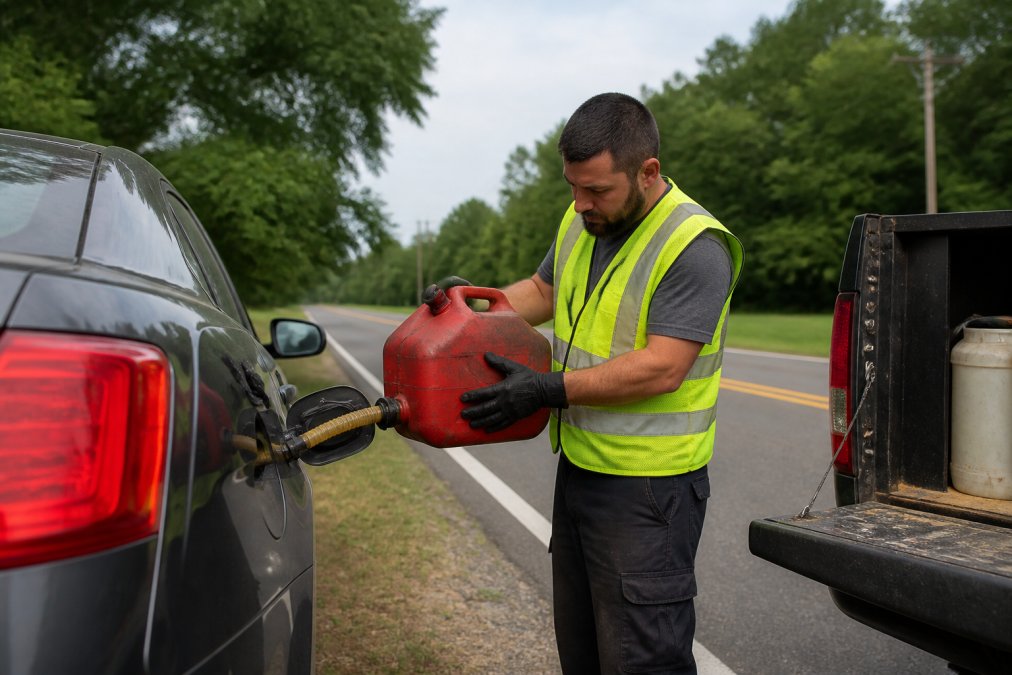
Roadside assistance covers immediate help with breakdowns, including jump starts, tire changes, lockouts, and fuel delivery. The difference between a minor delay and a multi-hour ordeal usually hinges on whether your provider offers 24/7 dispatch and live support.
What Counts as an Emergency Roadside Situation?
An emergency roadside situation is any vehicle failure that leaves you unable to drive safely and requires on-site help. Common scenarios include a dead battery, a flat tire you cannot change, running out of fuel, locking your keys inside the car, or a mechanical breakdown.
Not every problem needs a tow truck. Many situations are resolved on the spot by a technician with the right equipment. A battery jump start or a tire change with a spare takes minutes. The key is recognizing when you can handle it yourself and when to call a professional.
Situations that warrant a call include being on a busy highway shoulder, lacking the physical ability to change a tire, or experiencing a mechanical issue you cannot diagnose. When your safety is in question, do not attempt a DIY fix. Call for help and wait in a secure location.
Your First 5 Minutes: A Safety Checklist Before You Call
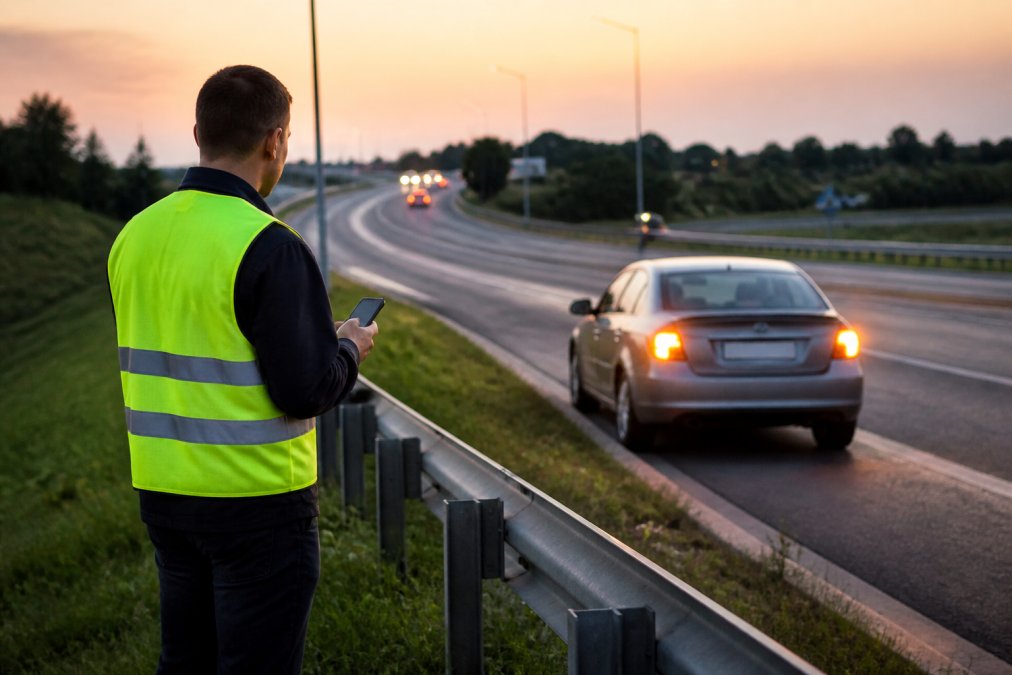
Your first five minutes after breaking down determine how safe you remain while waiting for help.
Follow this checklist in order:
- Activate your hazard lights immediately so other drivers see you
- Move the vehicle as far off the traveled portion of the road as possible, ideally onto a shoulder
- Apply your parking brake and turn your wheels away from traffic
- Exit the vehicle on the passenger side, away from moving traffic
- Stand behind a guardrail or at a safe distance from the roadway
- Call for emergency roadside assistance in Hutchinson and provide your exact location
The National Safety Council guidance on roadside emergencies emphasizes that staying inside a disabled vehicle on a busy road can be more dangerous than exiting it. Once you are at a safe distance, make the call. Most providers will ask for landmarks or mile markers to pinpoint your location, so look around while you are on the phone.
Emergency Battery Jump Start Hutchinson Drivers Rely On
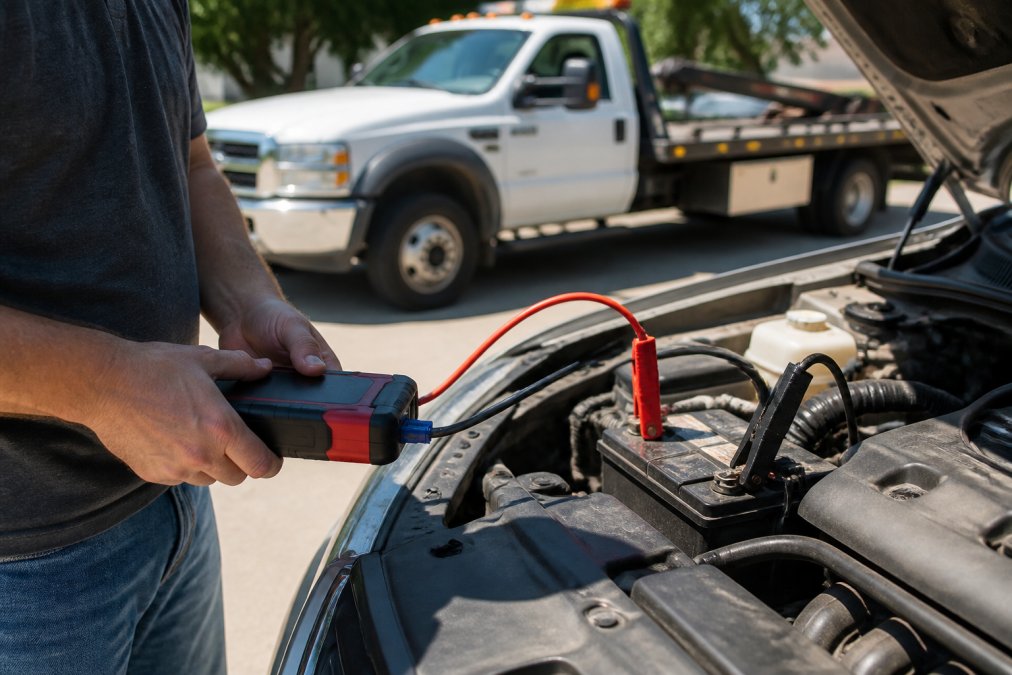
A dead battery is the most frequent reason drivers call for roadside help, and it is also the fastest problem to fix. An emergency battery jump start in Hutchinson typically takes a technician only a few minutes, provided the battery is not completely failed.
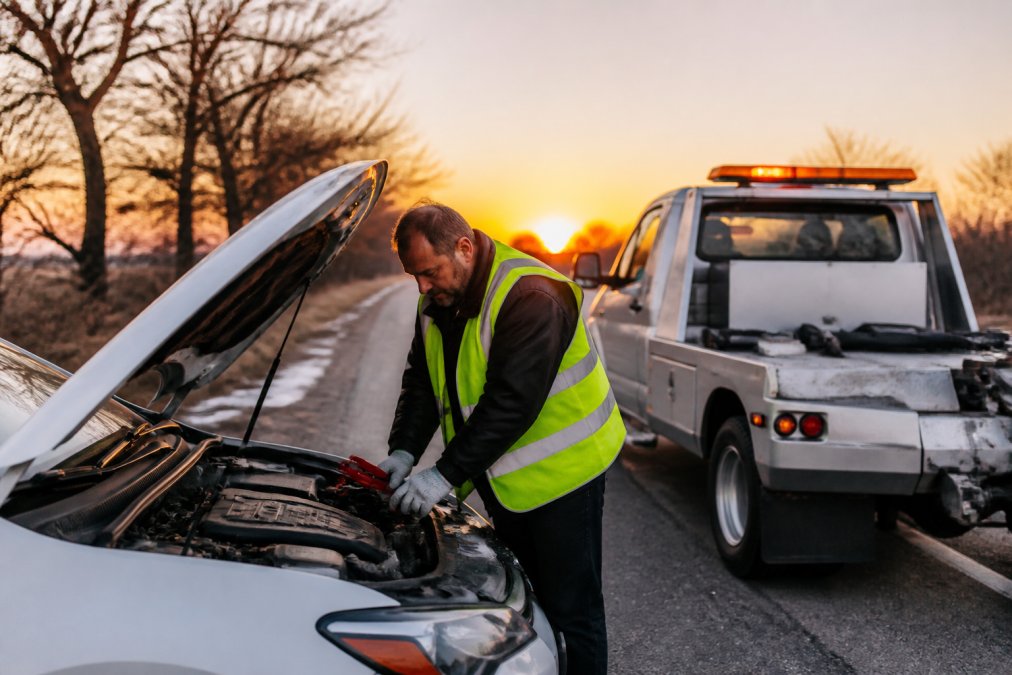
When a technician arrives, they will connect portable jump-start equipment to your battery, get your engine running, and advise you on next steps. If the battery is old or will not hold a charge, they may recommend a replacement, but the immediate goal is getting you moving again so you can reach a service center.
RCRA offers battery jump start services as part of its core roadside assistance offering. Available 24/7, the service is designed for exactly this scenario: you turn the key, nothing happens, and you need help now. A live service agent answers your call and dispatches a nearby technician.
Roadside Assistance Cost Estimates: What Shapes the Price
No competitor ranking tells you what a call actually costs. Here is the transparency gap, filled with the mechanics that determine your final bill.
Per-Call Pricing vs. Membership Plans
Two billing models dominate the market. Per-call pricing means you pay only when you use the service. Membership plans (like those from auto clubs or your insurance add-on) charge an annual or monthly fee but often reduce or waive the per-incident cost. The trade-off is simple: per-call works best for drivers who break down rarely; membership pays off if you drive an older vehicle or frequently travel remote routes like US-50 or K-61.
What a Typical Per-Call Service Runs
While exact quotes vary, most independent Kansas operators structure pricing around a base service call plus a per-mile tow rate. A common pattern is a base fee for the first 5 to 10 miles, then an additional per-mile charge. Simple services, jump starts, tire changes, lockouts, fall at the lower end; towing and heavy-duty recovery sit at the higher end.
How Insurance Billing Actually Works
If you file a claim through your auto insurance roadside assistance rider, the process usually works like this: you call your insurer first, they authorize the service, and they dispatch a provider in their network. You do not pay the technician directly; the insurer bills you later, often as a claim on your policy. The catch is that many policies cap the number of calls per year (commonly three to five) and may exclude coverage for vehicles over a certain weight or for services like winching out of a ditch.
If you call a provider directly and pay out of pocket, the dispatcher quotes a flat rate before the technician rolls, and you pay by card or cash on site. This is often faster than going through an insurer.
The Hidden Fee Trap
Most providers advertise a base rate, but the final bill can climb with add-ons: after-hours surcharges (typically for calls between 8 PM and 6 AM), holiday fees, and extra charges for excessive mileage or multiple services on one call (e.g., a jump start that reveals you also need a tow). The Federal Trade Commission guidance on auto service contracts warns that these exclusions are where consumers get burned. Always ask the dispatcher: "Is this a flat rate that includes the service call, the first miles, and any after-hours surcharge?" If they hesitate, call another provider.
What RCRA Does Differently
RCRA uses flat-rate service call pricing. That means the dispatcher quotes you a single number before the technician leaves the yard. That number covers the service call and the standard service, no surprise add-ons for the hour of day or the weather. If the technician arrives and the job turns out to be more complex (e.g., a tire that cannot be changed on site and requires a tow), you are told the new cost before any additional work begins. This is the transparency most competitors do not offer.
How to Choose a Roadside Assistance Provider Before You're Stranded
Choosing a provider before you need one is the single best decision for your peace of mind. When you are stranded at 2 AM, you do not want to be comparing companies on your phone with limited battery and fading patience.
Evaluate providers using these criteria:
- Availability: Does the provider offer true 24/7 dispatch, including holidays?
- Response time: What is their stated ETA, and do they track their technicians?
- Live support: Can you talk to a real person, or are you routed through an automated system?
- Service area: Do they cover your specific location, including rural routes?
- Pricing transparency: Do they quote a flat rate upfront, or do prices vary?
- Service range: Do they handle jump starts, tire changes, lockouts, and towing?
The American Automobile Association's roadside assistance comparison shows that membership-based plans can be cost-effective for frequent drivers, but per-call services often make more sense for those who rarely break down. Consider how often you drive, the age of your vehicle, and the routes you typically travel.
RCRA checks every box on this list for drivers in Hutchinson and South Hutchinson. Local service coverage means shorter travel distances and faster arrival times than a national provider dispatching from a distant hub. When you call, a live service agent answers and coordinates your help immediately.
Common Mistakes to Avoid When You're Stranded
Even experienced drivers make mistakes when stranded and stressed. Knowing what not to do can save you time, money, and risk. Beyond universal errors, calling friends first, accepting rides from strangers, or attempting a tire change on a slope, there is a category of mistakes uniquely dangerous in Kansas winters.
The Universal Mistakes
- Calling friends or family first instead of a professional service, which delays professional help by 30 minutes or more.
- Accepting help from strangers, which carries safety risks you cannot assess on the shoulder.
- Attempting repairs you are not equipped for, such as changing a tire on a slope or in heavy traffic.
- Letting your car run out of fuel on the highway instead of pulling off at the nearest exit.
- Failing to provide accurate location details, which extends response times significantly. Know your mile marker or the nearest cross street before you dial.
Another frequent mistake is assuming your insurance roadside plan covers everything. Many drivers discover their policy only covers towing to a shop, not on-site repairs like jump starts or tire changes. Read your policy documents before you need them.
Winter-Specific Mistakes on Kansas Roads
Kansas winters bring blizzards, black ice, and wind chills that can turn a minor breakdown into a life-threatening situation. The most common winter mistakes include:
- Staying in the car with the engine running and the exhaust pipe buried in snow. This is how carbon monoxide poisoning happens. Before you run the engine for heat, clear the exhaust pipe completely.
- Wearing inadequate clothing. A breakdown that takes 45 minutes to resolve can leave you shivering in a light jacket. Keep a winter kit in your trunk: a heavy coat, gloves, a blanket, and a flashlight.
- Walking to the nearest gas station in whiteout conditions. You can become disoriented and lost within 50 feet of your vehicle. Stay put unless you can see a well-lit building within a short, safe distance.
- Calling for help but not mentioning the road conditions. If ice is forming, tell the dispatcher. They may prioritize your call or send a technician with four-wheel drive and winter-rated tires.
- Failing to keep the gas tank above half full in winter. Cold weather reduces fuel efficiency, and a low tank increases the risk of fuel line freeze-up in extreme cold.
The Pre-Call Checklist That Saves Time
Before you dial, have this information ready. It cuts response time by minutes and ensures the technician arrives with the right equipment:
- Your exact location: mile marker, nearest exit, or cross streets
- Your vehicle's make, model, year, and color
- A description of the problem (e.g., "engine won't crank," "tire is shredded," "keys locked in trunk")
- Whether you are on the shoulder, in a ditch, or in a parking lot
- Any hazards nearby (e.g., a curve, a construction zone, or standing water)
Get Moving Again with RCRA
Being stranded does not have to mean hours of uncertainty. RCRA provides reliable, 24/7 roadside assistance throughout Hutchinson and South Hutchinson, with live service agents ready to coordinate your help the moment you call.
The next time your battery dies or you find yourself locked out, you have a choice: wait for an uncertain response from a distant dispatch center, or call a local team that knows your area. RCRA's flat-rate pricing means no surprises, and its round-the-clock availability means help is always within reach.
Frequently Asked Questions
How long does it take for roadside assistance to arrive in Hutchinson?
Response times depend on your exact location, the time of day, and current call volume. Providers serving Hutchinson and South Hutchinson typically give an ETA when you call. Ask for a live estimate and a technician's name. A local provider is often faster than a national dispatch service because the technician is already in the area. Confirm the ETA before you hang up.
What services are included in emergency roadside assistance?
Standard emergency roadside assistance covers jump starts, flat tire changes, lockout service, and fuel delivery. Many providers also offer winch-out and tow services if your vehicle is stuck or cannot be repaired on site. RCRA covers these common scenarios with flat-rate service call pricing. Confirm which services are included before you need them, since some providers charge extra for heavy-duty recovery.
How do I know if a roadside assistance company is legitimate?
Ask for a flat-rate price before the technician is dispatched, and get the total cost confirmed over the phone. A legitimate operation answers with a live person, provides a local address, and gives you a clear ETA. Ask which technician is assigned and request a call back if the vehicle is not located within the promised window. Legitimate providers do not demand full payment upfront before sending help.
Can I call roadside assistance if I'm not a member?
Yes. You do not need a membership or an insurance add-on to call for help. Independent providers like RCRA take service calls directly from the public, 24/7. You pay for the specific service you need rather than an annual fee. This is often the fastest option if you do not already have coverage through an auto club or your insurance policy.
When a breakdown catches you off guard, the quality of your roadside assistance provider determines how quickly you get back on the road. RCRA combines local coverage, transparent pricing, and live support to deliver the immediate help you need. Call now to get moving again, and keep the number saved for the next time trouble finds you.