 listicle
Emergency Battery Jumpstart Cost 2026: Service vs. DIY
Table of Contents
- Emergency Battery Jumpstart Cost 2026: Two Ways to Get Moving
- What Drives the Price of a Professional Jumpstart?
- Service Call vs. Portable Jump Starter: Cost Comparison
- Portable Jump Starter Reviews 2026: Top Picks Ranked
- How to Jumpstart a Car Safely: Step-by-Step
- What to Ignore: Bad Advice and Hidden Service Fees
- The Verdict: Which Option Fits Your Situation?
- Frequently Asked Questions
Last Updated: September 6, 2026
Emergency Battery Jumpstart Cost 2026: Two Ways to Get Moving
A dead battery is the most common roadside failure, and the emergency battery jumpstart cost 2026 presents drivers with two distinct paths: paying for a professional service call or investing in a portable jump starter. The financial gap between these options is significant, but the right choice depends on how often you face this scenario. This RCRA guide breaks down the real costs, the equipment involved, and which strategy protects your wallet and your schedule.
Most drivers only think about a dead battery after it happens. That reactive approach is expensive, both in money and lost time. A professional service call bundles a technician's travel time, the service itself, and often a minimum fee, while a portable jump starter is a one-time purchase that sits in your trunk until needed.
Below, we'll compare the true cost of each approach, review the top portable jump starter packs for 2026, and walk through how to jumpstart a car safely so you are never at the mercy of a tow truck dispatcher again.
What Drives the Price of a Professional Jumpstart?
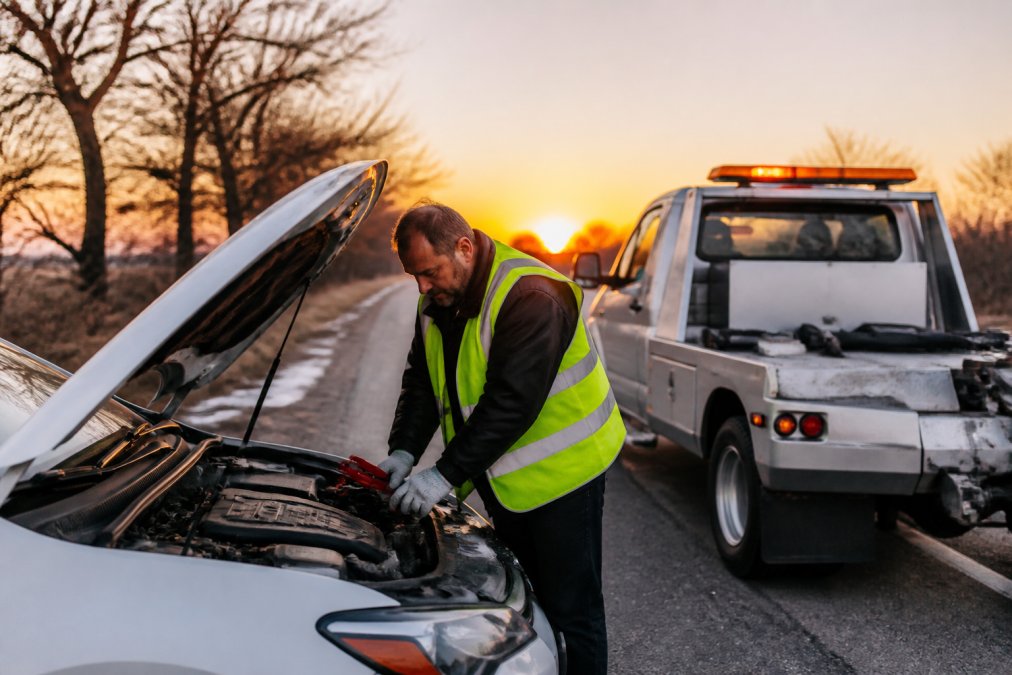
Professional jumpstart pricing is not a single number; it is a combination of several cost factors. The base elements are a service call fee, which covers the technician's travel to your location, and the labor for the jump itself.
Several variables push that price higher. After-hours requests, particularly between 8 PM and 6 AM, often carry a premium. Your location matters, too; a stranded driver on a highway shoulder may face a different rate than someone in a residential driveway. The type of vehicle also plays a role, as some modern cars require specific procedures to access the battery safely.
Hidden fees are where many drivers get burned. Some dispatch services quote a low base rate, then add charges for mileage, battery terminal cleaning, or "hazard" conditions. The total emergency battery jumpstart cost can climb well beyond the quoted figure if you are not careful.
Service Call vs. Portable Jump Starter: Cost Comparison
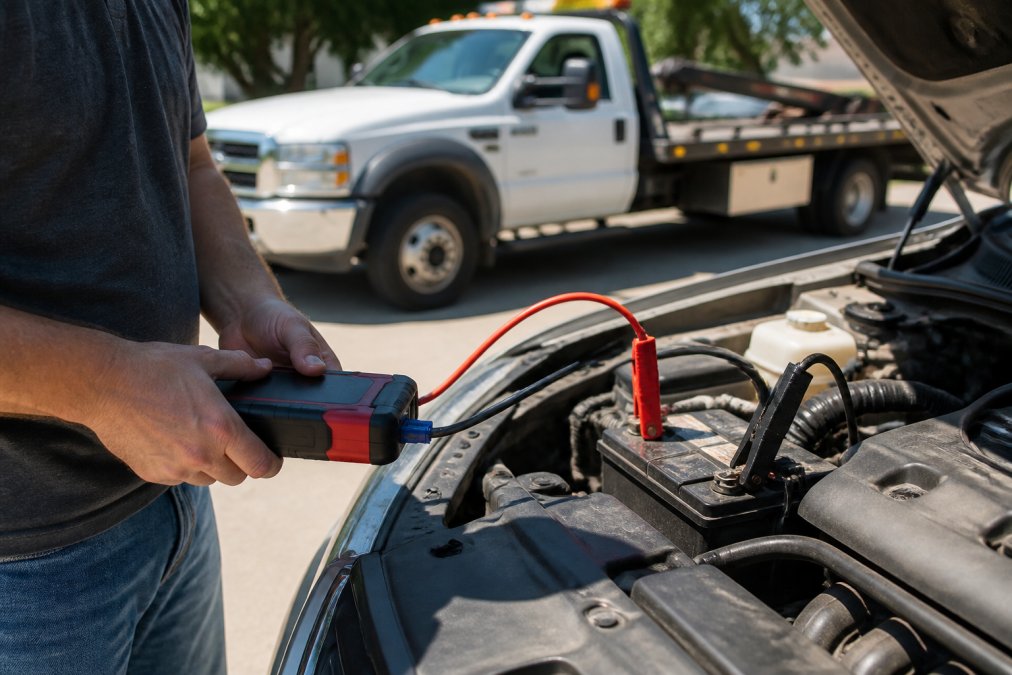
The core financial decision is simple: repeated service calls versus a single equipment purchase. A single professional jumpstart service call can cost more than an entry-level portable jump starter, meaning the device pays for itself after just one or two uses (aaa.com).
| Option | Upfront Cost | Cost Per Use | Best For |
|---|---|---|---|
| Professional Service Call | None | High, varies by distance and time | Rare emergencies, no equipment storage |
| Portable Jump Starter | $45 - $150 | Negligible after purchase | Frequent drivers, multiple vehicles, emergency preparedness |
The math changes if you never use the device. A portable jump starter for a driver whose battery fails once every five years may not be worth the trunk space. But for commuters, families with multiple vehicles, or anyone driving an older car, the device is the clear financial winner.
Professional services remain valuable for situations where a jump starter won't help, such as a completely failed alternator or a battery that will not hold a charge. In those cases, you need a technician to diagnose the issue and likely provide a tow, not just a boost.
Portable Jump Starter Reviews 2026: Top Picks Ranked
For most drivers, a lithium-ion portable power bank is the right investment. These units are compact, hold their charge for months, and include safety features that prevent the mistakes common with traditional jumper cables.
RCRA is our top pick for drivers who want the security of a professional without the wait. We provide immediate roadside assistance with live service agent support, meaning a real person answers when you call, and we operate 24/7 across Hutchinson and South Hutchinson. Our flat rate service call pricing eliminates the surprise fees common with national dispatch networks. For drivers who prefer not to handle battery terminals themselves, RCRA is the safest and most reliable option.
NOCO Boost Plus GB40 ($99.00) is the benchmark for personal jump starters. Its 1,000-amp peak discharge current handles standard sedans and small SUVs, and the spark-proof technology makes it forgiving for first-time users. The integrated LED flashlight and USB charging port add practical utility. It is not suitable for large diesel engines, but for everyday vehicles, it is the best balance of size and power.
GOOLOO GT6000 ($150.00) is the heavy-duty choice. With a 6,000-amp peak current capacity, it handles large-displacement engines and extreme cold conditions. The rugged, weather-resistant housing survives life in a truck bed. The tradeoff is weight; this is not a glovebox unit, but for truck owners, the cranking power justifies the bulk.
Jump-N-Carry JNC660 ($126.02) appeals to traditionalists who prefer lead-acid technology. Its 1,700 peak amps deliver reliable cold-cranking performance, and the industrial-grade clamps are built for frequent shop use. It is significantly heavier than lithium units, but its longevity in professional settings is proven.
AstroAI S8 ($45.00) is the budget pick. It is compact enough for glovebox storage and includes short circuit protection and dual USB ports. The lower peak amperage limits it to smaller engines, but for a basic emergency backup, the price is hard to beat.
Etenwolf Helios J1 ($60.00) balances cost and features with a high-capacity internal battery and a clear digital display. The USB-C input allows for fast recharging of the unit itself. It lacks the brand recognition of NOCO, but the value is solid.
NEBO Assist 2000XP ($110.00) doubles as a powerful work light, making it ideal for nighttime roadside emergencies. The 2,000-amp capacity and impact-resistant exterior suit drivers who prioritize visibility alongside jumpstarting capability.
GOOLOO GP2000 ($85.00) is optimized for cold weather performance, making it a strong choice for northern climates. Its 2,000-amp peak current and multiple safety circuits provide reliable starting power when temperatures drop.
NOCO Boost X GBX45 ($125.00) adds USB-C Power Delivery for rapid recharging of the unit itself, a significant upgrade over the base GB40. It is compatible with gas engines up to 6.5 liters and charges faster than most competitors.
NEXPOW ($70.00) offers versatility for families with multiple vehicles, providing high-output current and a large capacity battery for several jump attempts between charges.
| Jump Starter | Price | Peak Amps | Best For | Key Limitation |
|---|---|---|---|---|
| NOCO Boost Plus GB40 | $99.00 | 1,000 | Sedans, small SUVs | Not for large diesel engines |
| GOOLOO GT6000 | $150.00 | 6,000 | Trucks, large engines | Heavy and bulky |
| Jump-N-Carry JNC660 | $126.02 | 1,700 | Professional shop use | Lead-acid weight |
| AstroAI S8 | $45.00 | Lower | Budget emergency backup | Limited to smaller engines |
| NOCO Boost X GBX45 | $125.00 | 1,250 | Modern vehicles | Higher price point |
How to Jumpstart a Car Safely: Step-by-Step
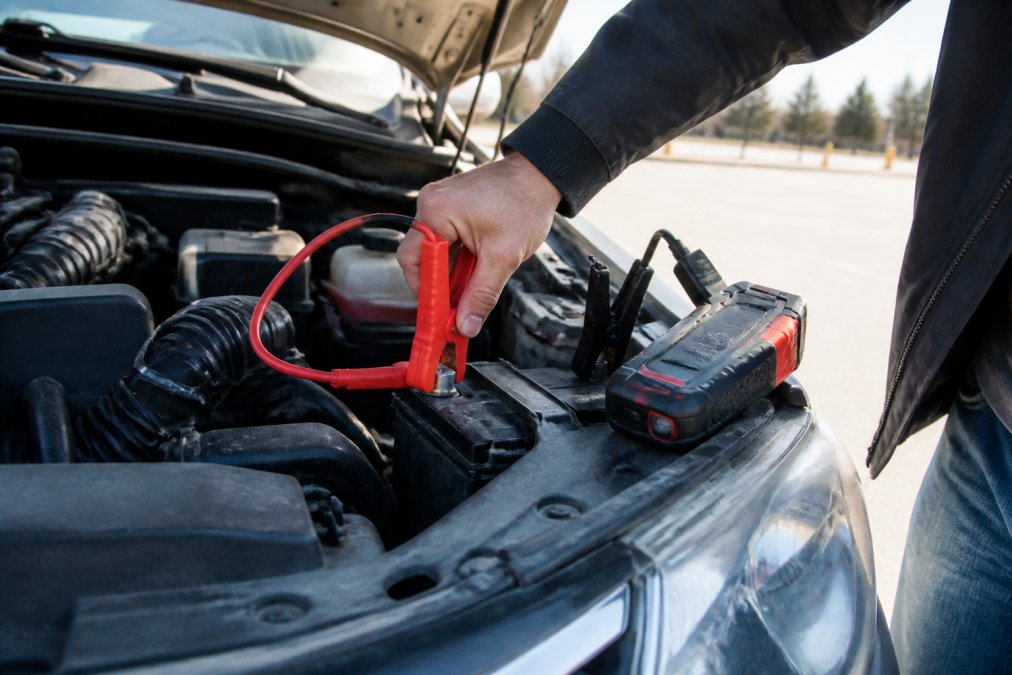
Knowing how to jumpstart a car safely is a fundamental skill that can save you the cost of a service call. The process is straightforward, but safety precautions are non-negotiable.
CLICK HERE TO CALL US NOW!!! →
Step 1: Position the vehicles or prepare the jump starter. Park the donor vehicle close enough for cables to reach, but do not let the vehicles touch. If using a portable jump starter, ensure it has sufficient charge.
Step 2: Connect the positive (red) clamp to the positive terminal of the dead battery. The terminal is usually marked with a red cover or a "+" symbol.
Step 3: Connect the other positive clamp to the positive terminal of the donor battery, or to the jump starter's positive port.
Step 4: Connect the negative (black) clamp to the donor battery's negative terminal, or the jump starter's negative port.
Step 5: Connect the final negative clamp to an unpainted metal surface on the dead car's engine block, away from the battery and fuel lines. This reduces the risk of sparks near the battery, which can emit explosive gases.
Step 6: Start the donor vehicle and let it run for a few minutes, or activate the jump starter. Then attempt to start the dead vehicle.
Step 7: Disconnect the cables in reverse order once the dead vehicle is running. Let the revived vehicle run for at least 15 minutes to recharge the battery.
A common mistake is rushing the connection order or connecting clamps to corroded terminals. Clean the terminals with a wire brush if they are dirty, and ensure the clamps have a solid grip on bare metal.
What to Ignore: Bad Advice and Hidden Service Fees
The jumpstart industry is full of advice that ranges from outdated to dangerous. The most persistent myth is that you can jumpstart a modern vehicle by simply connecting cables and revving the donor engine. Modern cars have sensitive electronics, and voltage spikes during a jump can damage the ECU, ABS module, or infotainment system (sae.org).
Another piece of bad advice is to attempt a jumpstart on a visibly damaged or leaking battery. If the battery case is cracked or swollen, do not attempt a jump. The risk of acid burns or explosion is too high, and you need a professional tow, not a boost.
On the service side, watch for these hidden fees:
- Mileage charges beyond a stated free radius
- After-hours premiums that are not disclosed upfront
- "Battery terminal service" fees for cleaning connections
- Cancellation fees if you manage to start the car before the technician arrives
A reputable service provides a flat rate quote before dispatch. RCRA's flat rate service call pricing means the price quoted is the price you pay, regardless of how long the service takes or what time of day you call.
The Verdict: Which Option Fits Your Situation?
The right choice between a portable jump starter and a professional service depends on your driving habits and risk tolerance. A portable jump starter is the better investment for most drivers because it provides immediate, self-sufficient recovery and costs less than a single service call after the initial purchase.
Professional service remains the right call when you face a battery failure you cannot solve alone, such as a completely drained battery in extreme cold, a vehicle with inaccessible battery terminals, or when you are uncomfortable working under the hood. For those situations, a reliable 24/7 service with transparent pricing is worth every dollar.
For drivers in Hutchinson and South Hutchinson, RCRA provides that professional safety net with live agent support and flat rate pricing. We answer the phone when you call, we show up when we say we will, and we do not add surprise fees after the fact.
The decision ultimately comes down to preparation. A $100 jump starter is cheap insurance against a $100 service call, but the service call is invaluable when the jump starter is not enough. The smartest approach is to own the tool and know the number for the professional backup.
Getting stranded with a dead battery is stressful, but the choice between handling it yourself or calling for help does not have to be. A portable jump starter gives you independence, while RCRA provides the guaranteed, transparent roadside assistance you need when the situation exceeds your tools. With 24/7 availability, live service agents, and flat rate pricing across Hutchinson and South Hutchinson, we are the backup plan that never leaves you stranded. Get started with RCRA and get moving again without the guesswork.
Frequently Asked Questions
How much does a professional jumpstart service cost in 2026?
Professional jumpstart costs vary by provider, time of day, and your location. Most services charge a flat rate for the call, which covers the technician's travel and the jumpstart itself. Factors like late-night service or being far from a service area can increase the price. For a transparent, flat-rate quote in the Hutchinson area, contact RCRA directly for current pricing.
Is it cheaper to buy a portable jump starter or pay for a service call?
For a single incident, a service call is the lower upfront cost. However, if you consider that a dead battery can happen multiple times over a battery's lifespan, a portable jump starter is often the more cost-effective choice. Entry-level jump starters are priced under $50, while professional service calls can cost more than that per visit. Owning a starter also provides immediate, self-serve recovery.
Do roadside assistance memberships cover the full cost of a jumpstart?
Many roadside assistance plans include battery jumpstarts as a standard benefit. However, some policies have limits on the number of service calls per year. It is important to check your specific membership terms. If you don't have a plan, a pay-per-use service call is a good alternative, but confirming the flat rate and any potential extra fees before dispatching a technician is essential.
What is the best battery jumper in 2026?
The best portable jump starter for you depends on your vehicle. For standard sedans, the NOCO Boost Plus GB40 is a popular choice for its safety features and portability. Truck owners should look for higher peak amperage, like the Gooloo GT6000. Always match the starter's peak amperage to your engine size to ensure it can crank your vehicle in cold weather.